Cart
Rated 4,7/5★ by our Customer

Samurai Sword

Real Samurai Swords for sale

Japanese Swords

The most famous Samurai sword is called a katana. A Katana (かたな) is a type of Japanese sword known for its curved, single-edged blade. It features a guard, called a tsuba (鍔, lit. Sword Guard), and a handle long enough to be held with both hands. The blade is approximately 24 inches (2 shaku) long and was used by samurai in combination with a shorter sword called a wakizashi. The combination of a Katana sword and a Wakizashi sword forms a daishō (大小, lit. “big-little”).

Samurai carried two swords, a katana and a wakizashi, as a symbol of their status, but also because each blade was used for a specific reason.

The katana, a long sword with a curved blade, was the primary weapon used for combat, while the wakizashi, a shorter sword, was a backup weapon or used for close-quarters fighting. The combination of the two swords, known as a daishō (大小, lit. “big-little”), represented the samurai’s social and martial status. The katana and wakizashi were often worn together, with the katana worn on the left side and the wakizashi on the right. In some cases, the wakizashi was also used for the ritual suicide of seppuku, which was considered a way for a samurai to die with honor rather than be captured.


The price of a samurai sword can vary greatly depending on a number of factors, such as the quality of the materials used, the craftsmanship, the age and rarity of the sword, and the reputation of the maker. Antique samurai swords can be very expensive, with some examples selling for hundreds of thousands of dollars. Modern reproductions of samurai swords can be purchased for much less, with prices ranging from a few hundred dollars to several thousand dollars, depending on the level of quality and detail.

It is important to note that the price of a samurai sword is not necessarily an indicator of its authenticity or value as a collectible. It is always a good idea to research the seller and the sword carefully before making a purchase.


The samurai used five different swords, each one used on a specific situation and serving a specific purpose.

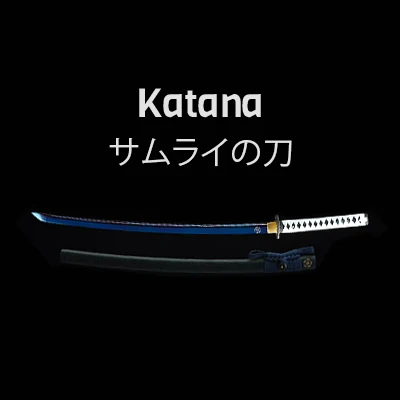
1. The Katana

The Katana is the most famous sword used by Japanese Samurai. It’s a long, curved sword with a single edge that is traditionally made of tamahagane steel. The katana is known for its sharpness and strength and was the primary weapon used by the samurai for combat.

2. The Wakizashi

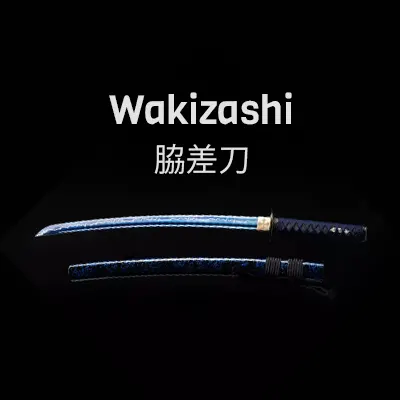
The Wakizashi is the short sword carried by Samurai. The Wakizashi was was used as a backup weapon or for close-quarters fighting.

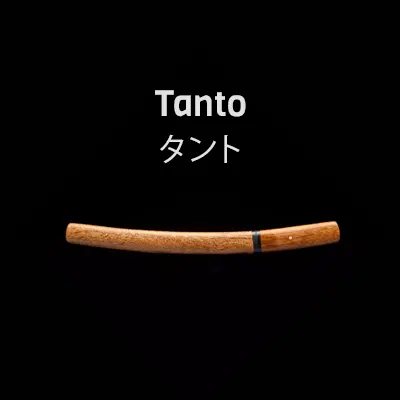
3. The Tanto

The tanto is a type of Japanese knife or dagger with a blade length of less than 30 cm. It was worn by the samurai as a side arm and was used for close-combat fighting or for ritual suicide, known as seppuku.

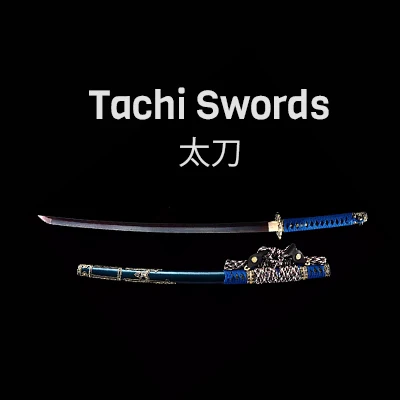
4. The Tachi

The tachi is a type of Japanese sword used primarily by mounted samurai. The Tachi was designed for use while riding a horse and was characterized by a long, slender blade of more than 60cm and that is distinctively curvier than that of the katana.

5. The Nodachi

The nodachi is a type of Japanese sword with a blade length of more than 90 cm and was typically wielded with two hands. The nodachi is a type of Japanese sword with a blade length of more than 90 cm. It is characterized by its very large size and is also known as an “odachi” or “otsuchi.” The nodachi was used in open battlefields and was typically wielded with two hands. It was a formidable weapon, capable of delivering powerful blows, but it was also unwieldy and difficult to wield due to its size.

Here is table with the length of all the swords and blades used by Samurai:

NameBlade LengthFull Length
Katana60 cm (23.62 in)100 cm (39.37 in)
Wakizashi30 cm (11.81 in)60 cm (23.62 in)
Tanto15 cm (5.91 in)30 cm (11.81 in)
Nodachi90 cm (35.43 in)150 cm (59.06 in)
Tachi60 cm (23.62 in)100 cm (39.37 in)

Katana swords are known for their extreme sharpness. They were traditionally made of tamahagane steel, which was forged using a specialized process that resulted in a blade with a very hard edge and a softer, more resilient spine. This allowed the katana to maintain its sharpness while also being able to absorb the impact of a strike without breaking.

The sharpness of a katana is often tested by cutting through bamboo or other materials. It is not uncommon for a well-made katana to be able to easily slice through several inches of bamboo in a single stroke. However, the sharpness of a katana can vary depending on its age, the quality of the materials used, and the skill of the maker. Some antique katanas are still extremely sharp, while others may have lost some of their edge over time.

The process of making a samurai sword, or katana, is a highly skilled and labor-intensive process that involves several steps. Here is a brief overview of the traditional process of making a katana:

  1. The first step in the process is to gather the raw materials. This typically involves sourcing high-quality steel and other materials, such as iron sand, coal, and clay.

  2. The steel is then melted in a special furnace called a tatara and poured into a mold to create a rough block of steel known as a kera.

  3. The kera is then heated and pounded repeatedly to create the desired shape and texture. This process is called forging.

  4. The forged steel is then coated with clay and heated again. The thickness of the clay determines the final shape of the blade and the pattern of the hamon (the distinctive wavy line on the blade).

  5. The blade is then quenched, or cooled rapidly, in water. This hardens the edge of the blade and gives it its characteristic sharpness.

  6. The blade is then ground and polished to achieve the desired level of sharpness and finish.

  7. The blade is then fitted with a handle, or hilt, and a guard, or tsuba. The handle is often made of wood or other materials, and the guard is typically made of metal.

  8. The completed sword is then inspected and tested to ensure that it meets the necessary standards of quality and performance

On average, it can take 3 to 4 weeks to make a basic and standardized samurai sword, or katana. The process is highly skilled and labor-intensive, and it involves several steps. The time required can vary depending on the size and complexity of the sword, the materials used, and the skill and experience of the sword maker. While it is possible to make a katana in a shorter period of time using modern tools and techniques, the process of making a high-quality katana is still very time-consuming and requires a great deal of skill and expertise.

Katana Sword

On a Budget

Cheap Katana from 199$

Middle Range

High-quality Katana from 299$

High End

Premium Katana from 499$
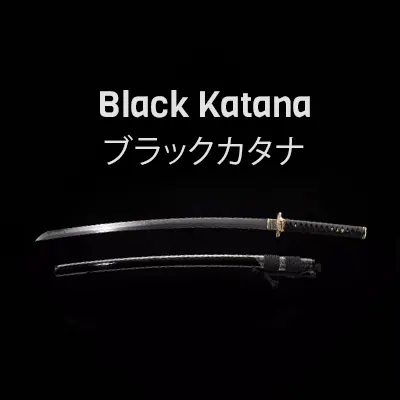
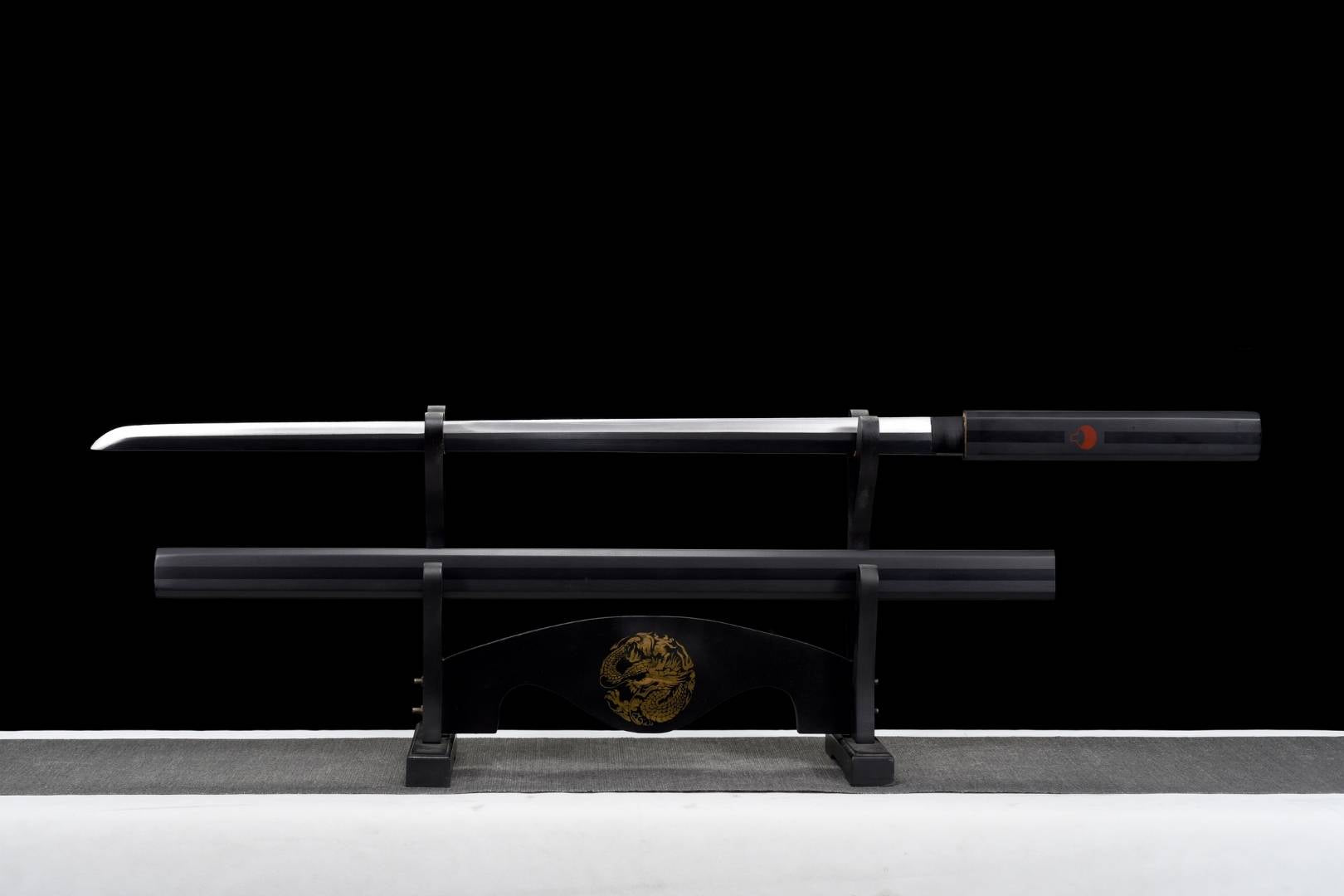
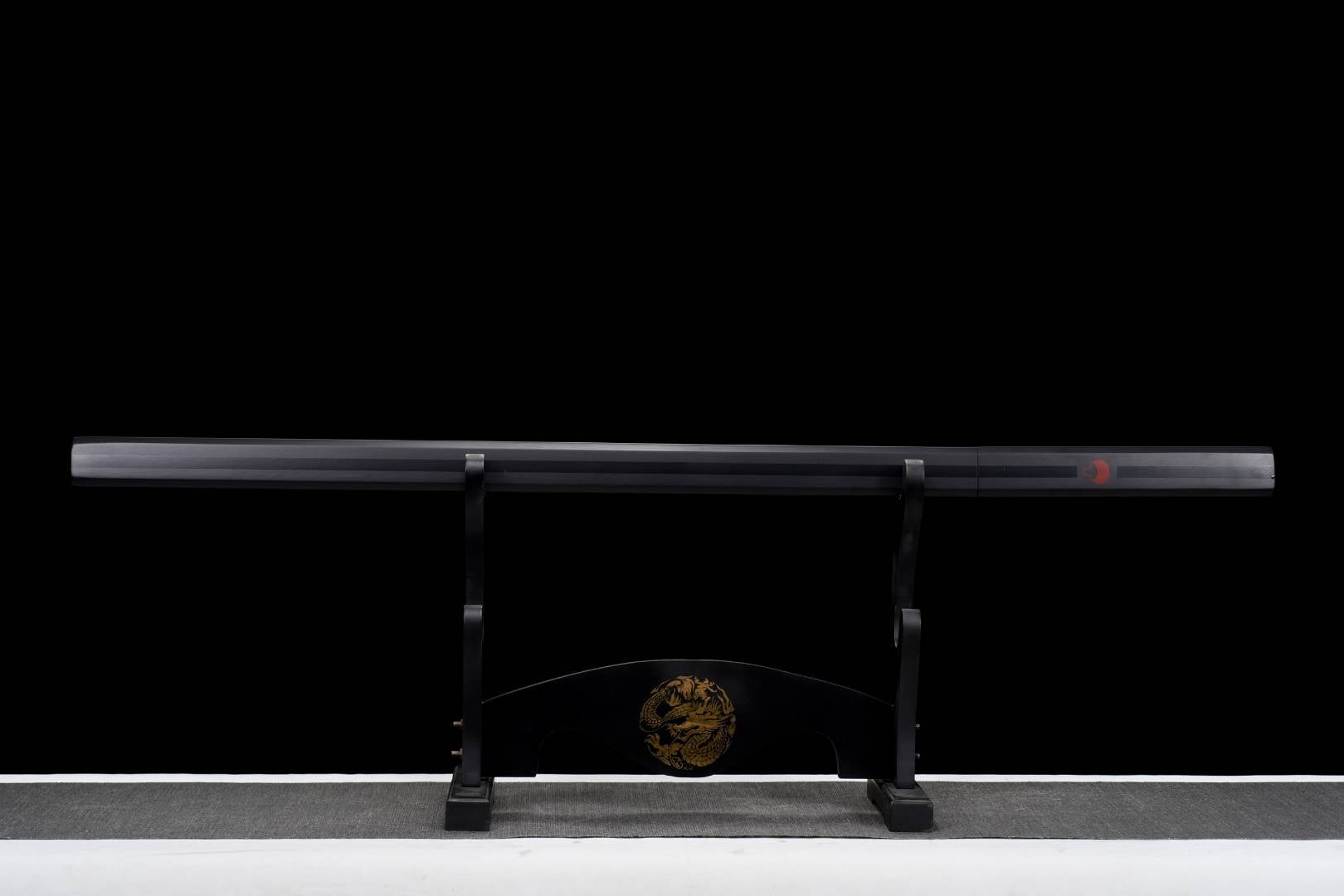
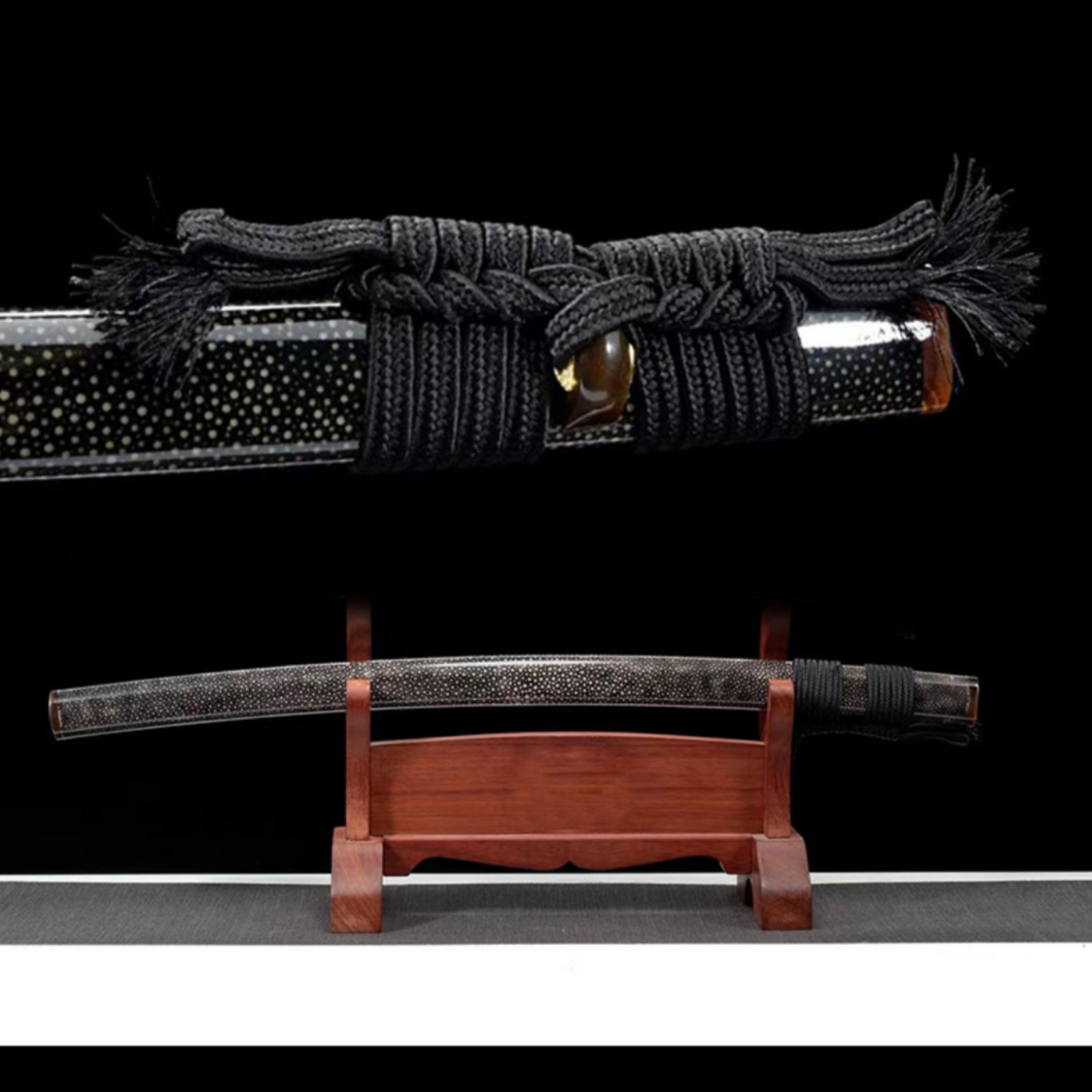
Black Katana
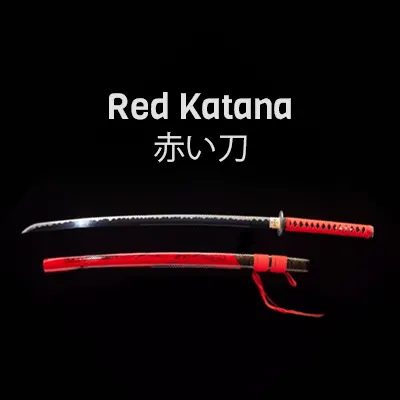
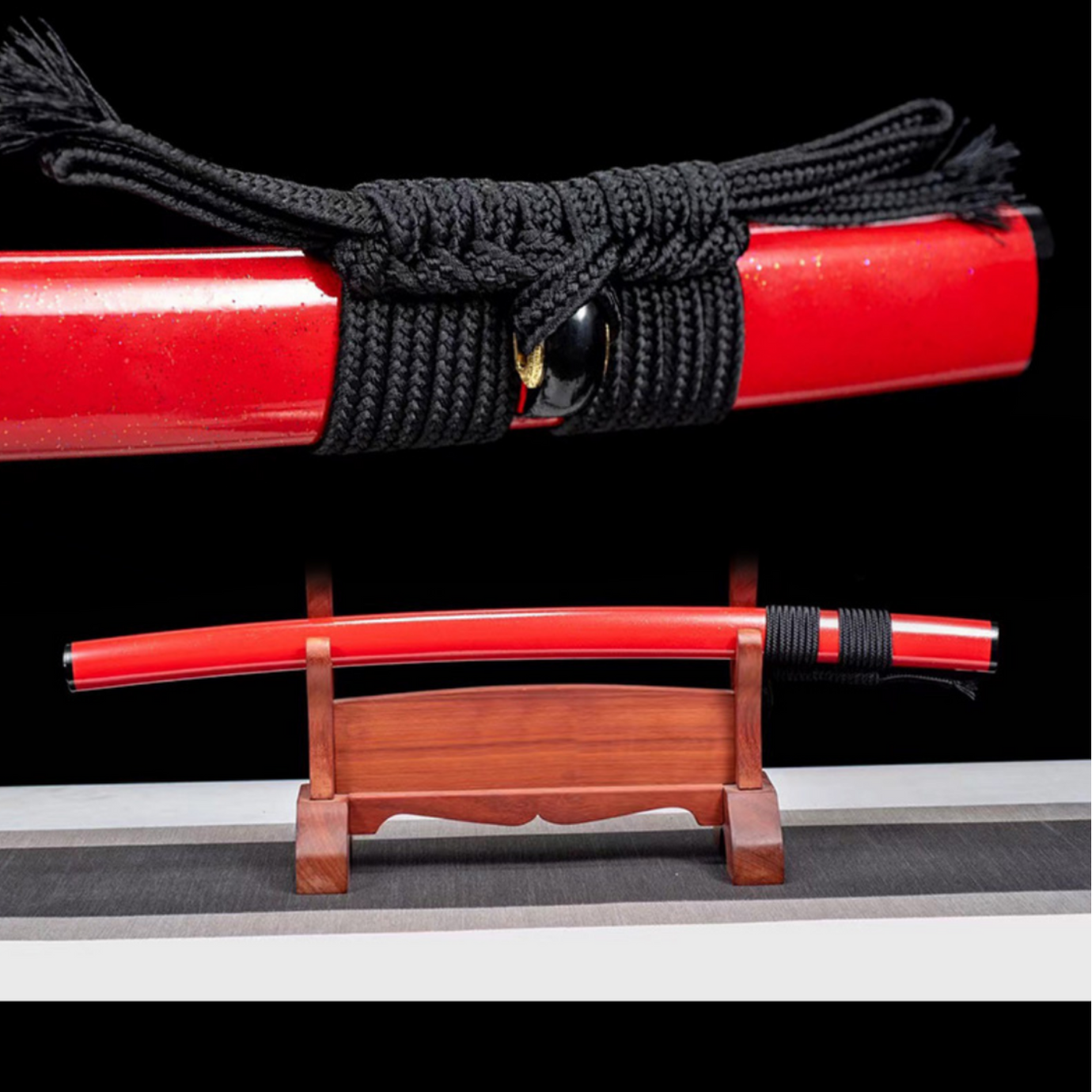
Red Katana
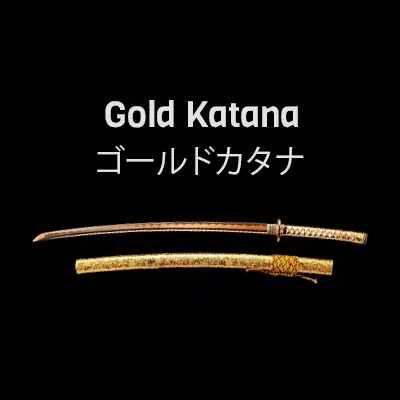
Gold Katana
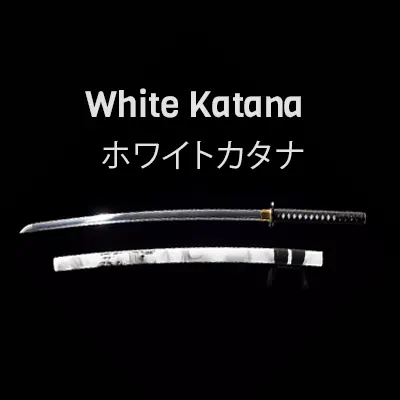
White Katana
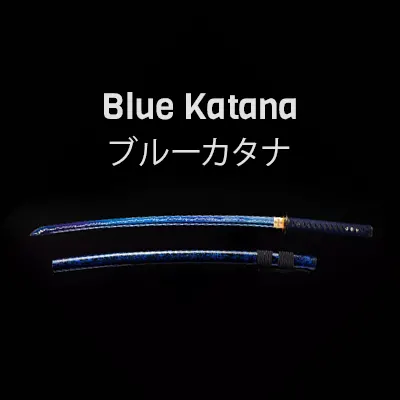
Blue Katana

A Katana (刀, かたな lit. “sword”) is a type of Japanese sword characterized by its distinctive appearance: a single-edged blade with a curved shape and a circular or squared guard usually made of metal called Tsuba. The blade of a katana is usually around 60-70 cm in length and is sharpened on one edge, with a pointed tip and a slight curve.

The handle of the katana, called the tsuka, is wrapped in cord or leather and is typically around 25 cm in length. The scabbard, or saya in Japanese, is typically made of wood and is used to hold the katana when it is not in use. The katana is a highly respected and revered weapon in Japan, and it is often associated with honor, tradition, and the samurai class.

 
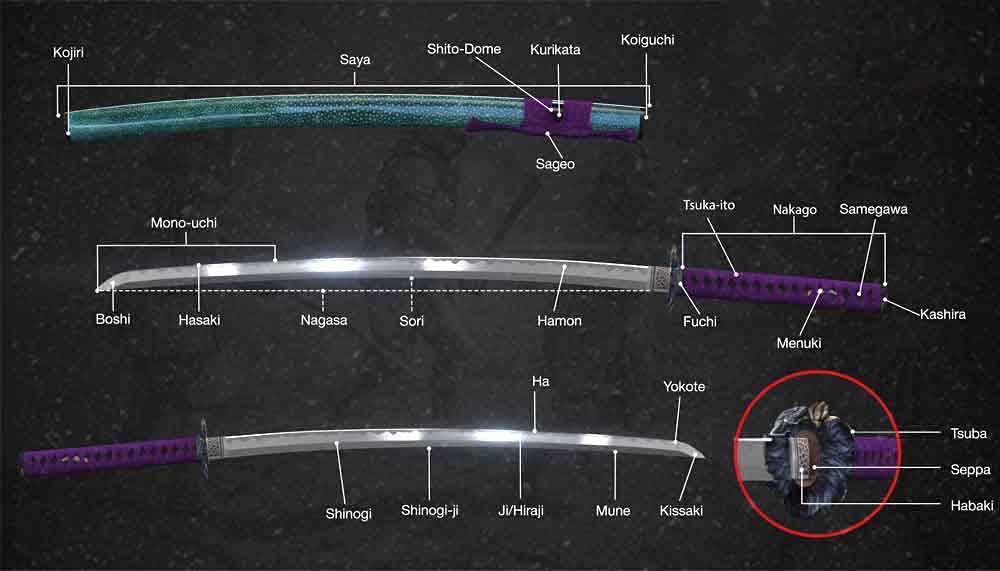
Here is a list of all the parts of a Katana word:
 
Name (Kanji)Definition
Boshi (母子)The hardening line of the hamon which extends to the tip (kissaki) of the katana
BO-HI (棒樋)A line carved inside the blade of the katana that allows to reduce the weight of the blade, but also to adjust the balance point of the sword
Ha (刃)The cutting edge of the blade
Hamon (刃文)The line of tempering that demarcates the most rigid and sharp part of the blade with the other, more flexible part
Hagane (鋼)The blade of a katana, made from a type of Japanese steel called tamahagane
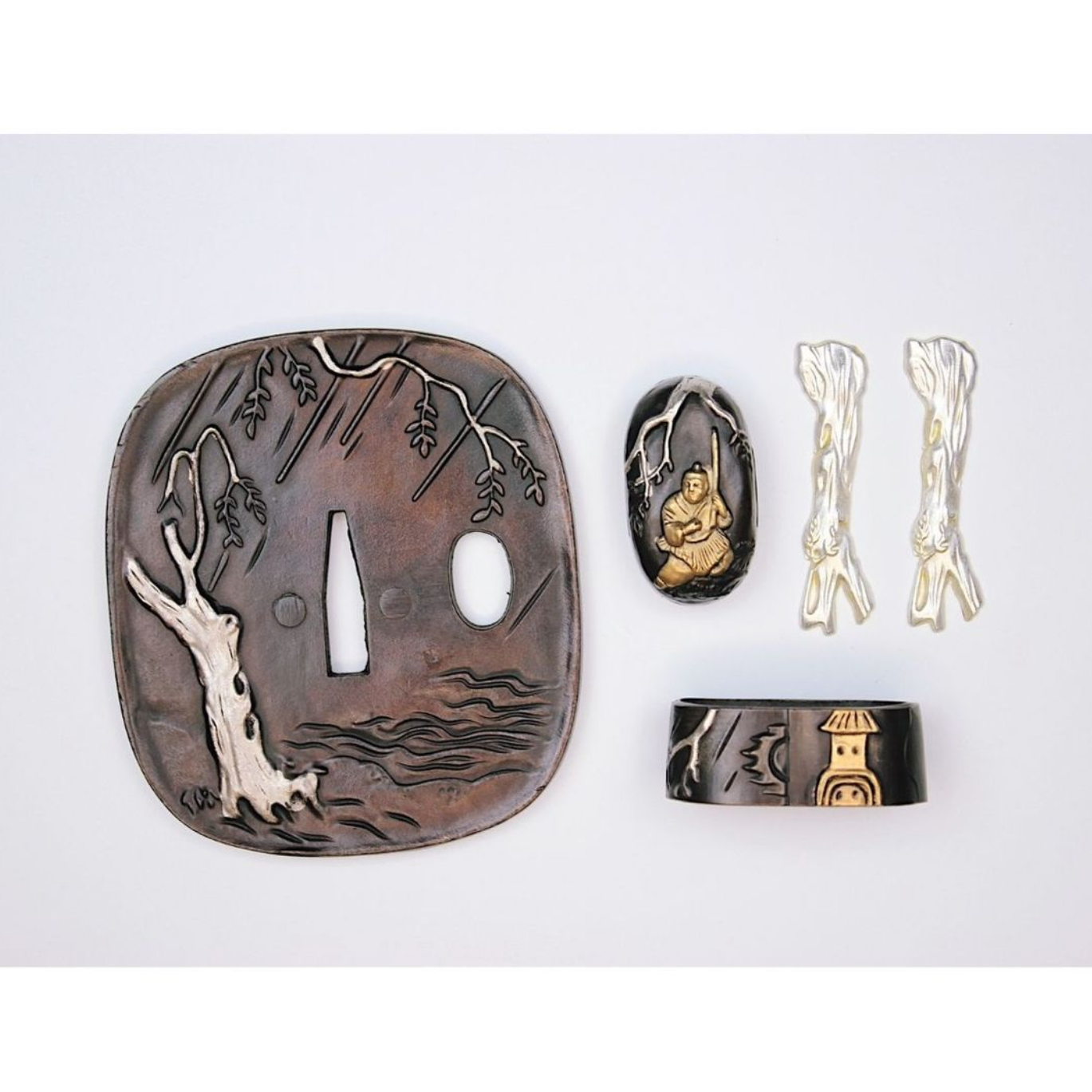
Habaki (鎺)A small, decorative element that sits between the blade and the handle of the katana and helps hold the blade in place in the scabbard
Kashira (頭)The decorative element that sits at the end of the handle on the katana
Kissaki (切先)The tip of the katana
Kurigata (栗形)A loop of cord or leather that is used to attach the saya to the belt
Mekugi (目釘)Small wooden pins that hold the tang of the blade in place in the handle
Menuki (目貫)Small decorative elements that are found on the handle of the katana
Nakago (中心)The tang of the katana, which is the part that continues from the blade under the handle
Sageo (下緒)A rope that allows the katana to be attached to the practitioner’s belt
Saya (鞘)The scabbard of the katana, which is a wooden sheath that holds the katana when it is not in use
Seppa (切羽)Small washers that fill the gaps between the tsuba and the hilt, as well as the habaki and the tsuba
Shinoogi (平押)The flat portion of the blade
Shinogi-Hi (背押)The ridged portion of the blade
Shiadome (仕上げ)A small, round piece of metal that sits at the base of the saya
Sori (反り)The curvature of the blade
Tsuba (鍔)The guard of the katana, which is a decorative element that sits between the blade and the handle and protects the hand
Tsuka (柄)The handle of the katana, which is wrapped in cord or leather and is used to grip the sword
Tsuka-Ito (柄糸)The cord or leather wrapping that covers the handle of the katana
Yokote (横手)The line that separates the blade from the kissaki

Samurai Sword® is the best Sword store online to buy authentic and real Katana Swords. Our shop offers a wide catalog of great Katana swords with different styles, steels, forging techniques and prices starting a less than 200$!

At Samurai Sword®, we are proud to offer high-quality katana swords that are crafted by skilled artisans using traditional techniques. Our swords are made with the finest materials and are built to withstand the rigors of training and combat. Whether you are a beginner or an experienced swordsman, we have a katana sword that will suit your needs and budget. Our team of experts is always available to help you choose the perfect sword and answer any questions you may have. Order yours today and join the ranks of the samurai!


In the United States, it is generally legal to own a katana for decorative or collectors’ purposes, provided that you are at least 18 years old and have a clean criminal record. However, it is illegal to carry a katana in public in most states unless it is being used for ceremonial or display purposes. Some states have specific laws regulating the ownership and possession of swords, so it is important to check the laws in your state to ensure that you are in compliance. It is also important to note that while it is legal to own a katana, it is illegal to use it to threaten or harm another person.

For other countries, the laws regarding the ownership and possession of swords may vary, so it is recommended to check your local rules to ensure that you are in compliance.

Yes, at Samurai Sword®, all of our katanas are full tang, which means that the blade and the handle of the sword are made from a single piece of steel. This construction method is considered to be the strongest and most durable, as it allows for maximum strength and balance. Full tang katanas are typically preferred by martial artists and collectors because of their superior quality and craftsmanship.


Chinese Sword

Samurai Armor

Where to buy Samurai Swords?

Samurai Sword® is the best Sword store online to buy real Katana Swords, Japanese Swords, and Chinese Swords for sale. Shop an authentic and real Samurai Sword for sale forged by true swordsmiths in China and Japan!

Free Shipping

Receive your products with Free Shipping in more than 200 countries in the world!

30 days returns policy

Returns are available up to 30 days after receiving your order!

Customer Support

Chat with our customer service by email from monday to friday, 9AM to 5PM

100% Secure Checkout

Enjoy your online purchases with most of the credit cards (Visa, Amex, Mastercard)